Pages

Tuesday, February 23, 2016

Pollution in Agriculture

By Micalah B

Concerns on what newer, modern-day farming techniques are actually doing to our environment have surfaced in the agriculture community, making it one of agricultures biggest problems today. Agricultural pollution refers the byproducts of farming that cause contamination or degradation of the environment. This however, is a very general definition. The truth of the matter is, no single cause can be pinpointed as the leading contributor in the dilemma, but rather a series of issues creating this controversial mess.

One present-day, environmental concern in agriculture is pesticides/fertilizers. Pesticides and fertilizers have been around for a very long time, and they are a huge part of farming. Farmers use pesticides and fertilizers to protect their crops from being damaged and harmed by local pests. However, these local pests have become more resistant to the original pesticides and fertilizers, so harsher versions have been produced. These harsher pesticides and fertilizers are full of unnatural chemicals not normally found in nature. Once sprayed, much of it will be absorbed by the plants, often eaten by local animals, causing them contamination. The rest of the spray will seep into the ground, contaminating groundwater with these toxic chemicals.

Contaminated water used to irrigate crops is another source of pollution. Much of the water used for irrigation is clean, fresh water from ground reservoirs, canals, and rains. However, some of this water can be polluted, due to past, improper disposal of industrial and agricultural waste. This water is full of mercury, arsenic, lead and cadmium.When crops absorb this water, they absorb the chemicals with it, causing crop failure, making the fight on agricultural pollution even more difficult.

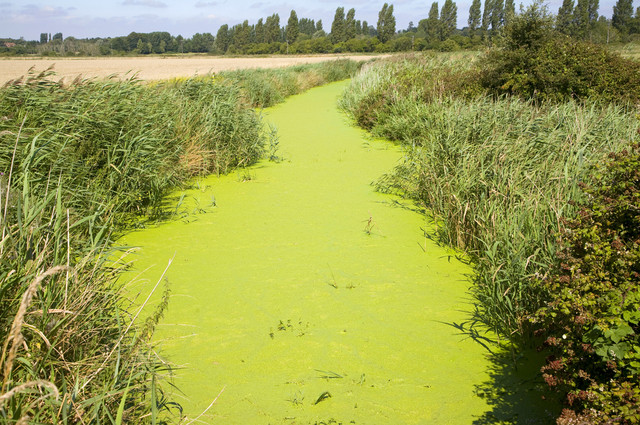
Another modern-day problem we see in agriculture is soil erosion and sedimentation. Soil is composed of many layers, however only the top most layer can support farming and grazing. However, due to inefficient farming practices, this top soil can be left open, and the soil can be eroded away, causing a decrease in soil fertility. Eroded soil must be deposited somewhere, and in this case, it is often deposited in local streams, rivers, and ditches. This build up of soil often causes blockage, making water movement difficult, causing it to stagnate and ultimately become unusable.

Above are a few agricultural pollution problems among many that the field faces today. The pressure to find solutions for these issues has become greater, as environmental concerns become more prevalent in today's society. Agriculture is a field that cannot cease to exist, for it is what feeds the world. Because of this, a sustainable practice of it must be developed, so it does not go from being what keeps us alive, to what ultimately destroys us.


https://en.wikipedia.org/wiki/Agricultural_pollution
http://www.conserve-energy-future.com/causes-and-effects-of-agricultural-pollution.php

http://www.bloomberg.com/news/articles/2012-03-12/water-pollution-from-farming-is-worsening-costing-billions

http://www.epa.gov/nutrientpollution/sources-and-solutions-agriculture

Sunday, February 21, 2016

The Importance of Networking

-Abbie W.
This weekend, I had the opportunity to attend a conference on beef, sheep and swine care. Through this I was given the chance to hear from many different speakers in the ag industry. I also had the chance to talk with many of them in person. Some were faculty here at Michigan State, while others were producers of the different livestock. I was able to build a network with these people over the weekend that will help with job or internships in the future. In addition, I have learned so much in terms of where jobs in agriculture are going.
To start with our keynote asked us the question: “what three things will define you in 20 years?” Though this was aimed at the middle school and high school students in the room, it made me think. I will be almost forty years old at this time, where do I want to be at this time in my life, the answer scared me because I had no answer. As the keynote continued she gave examples of how our life paths will not always be the clearest to us. This made me feel a bit better but at the same time, being someone who has to have a clear plan, it frightens me. However, one point the keynote made is our population is continuing to grow at an outrageous rate. Somehow the ag industry is going to have to figure out how to feed all these people. This means jobs in the agriculture field are only going to increase and there will be the formation of new jobs. If you look back twenty years ago this was a time when the world thought the cloning of sheep or animals was the next big step in the world. Little did we know it was the creation of the internet that would gear the future generation.
Between technology and the new generation becoming a part of the agriculture world there will be many new and creative ways to feed the world. This is important because it allows for job security for those of us entering the field. With college tuition the outrageous price it is important knowing there will be job opportunities. The aspect of the job world though is that a lot of the times it is all about who you know in the industry. Therefore, it is very important to build contacts and network. That is why it is so important to get involved and be active in taking advantage in opportunities that are presented to you in the next four years.  The key is to sell yourself, as well. Through this workshop we had a leader come in and teach the elevator speech. Even though I was a committee member who had to put this on, I was advised to prepare one with the rest of the group. She also, explained to me personally the importance of having a three-minute pitch about myself along with my thirty second speech.

From this weekend I learned though these next four years may be tough and confusing at times. That is life sometimes we feel we are on a straight path to our dreams, other times we are in a full wood amongst hundreds of trees. The important aspect is to remember put yourself out there, do not burn too many bridges because you never know when these connections will come in handy.

Helping The "Stuck" Youth With Change

By:Janae S.

        People often wonder are the youth in society capable of changing their behavior, It all begins with helping the youth identifying the certain behavioral problem. An an advocate In order to help the youth in the change process, I can tailor the intervention, but this is not to convince the youth to change their behavior It's to help them move along the stages of change. By starting with a brief and simple advice, it would help makes sense because some youths will change their behavior at the directive of their advocate.

        Well-phrased questions will leave the youths pondering about the answers that are right for them and will help them along the process of change. Some questions advocates ask are: “What makes you want to change at the time?” or “What do you think you need to learn about changing?”. Questions should always ask about successes, difficulties, strategies to help the youth overcome different barriers.

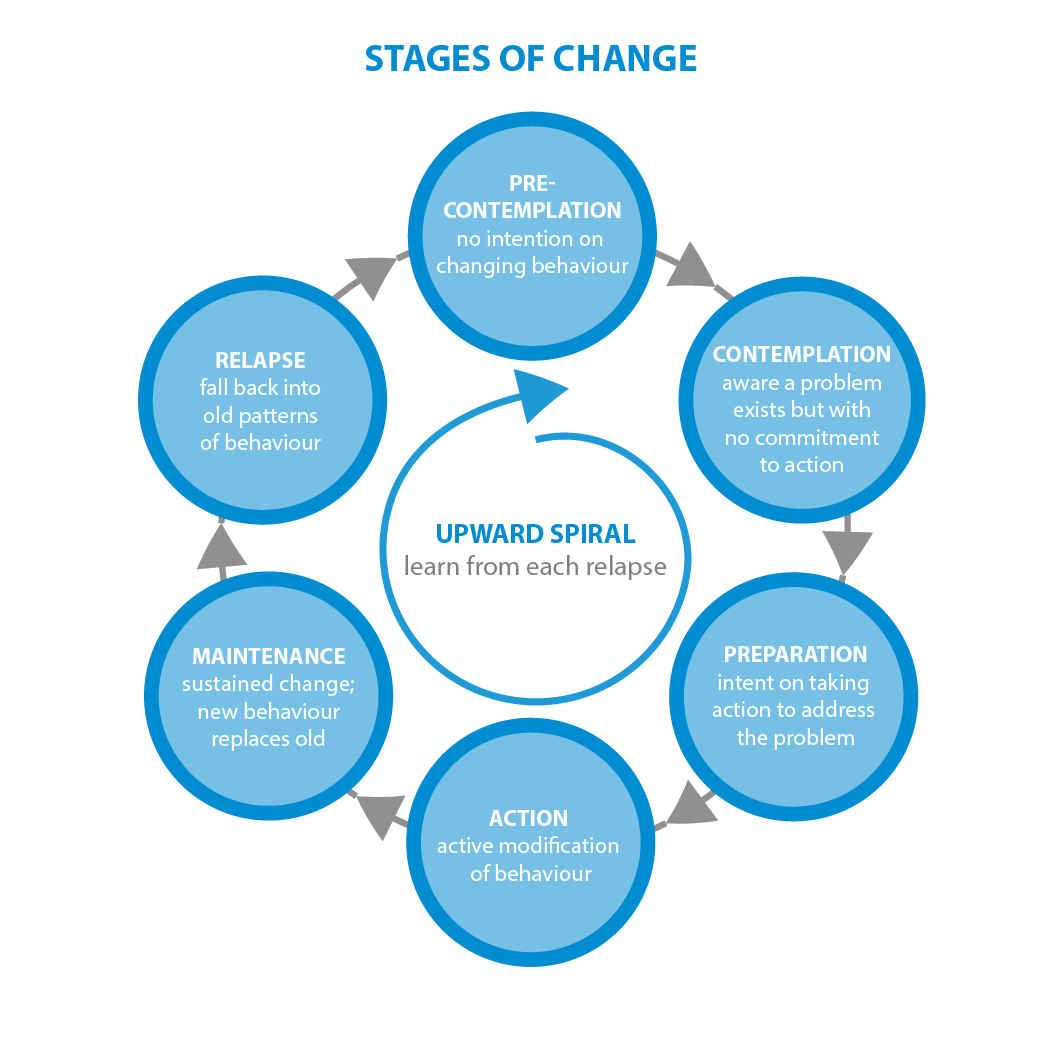
         Below are the following 7 stages people go through in making important changes in their behaviors. All of the stages are important because we learn from each stage. Many people tend to don't go through all of the stages, and for others its takes several times before the change really lasts.

The seven stages of change:

  1. Pre-contemplation:(Not yet acknowledging that there is a problem behavior that needs to be changed)
  2. Contemplation: (Acknowledging that there is a problem but not yet ready or sure of wanting to make a change)
  3. Preparation/Determination: (Getting ready to change)
  4. Action/Willpower: (Changing behavior)
  5. Maintenance: (Maintaining the behavioral change)
  6. Relapse: (Returning to older behaviors and abandoning the new change)
  7. Transcendence:(accepting old behaviors as destructive and abnormal)

       As individuals, it is important to recognize where you are in the cycle of change, so you can set appropriate goals and action steps for your life. At some point in everyone's life there comes a moment when people begin to realize they need to change. It comes down to motivation between those who successfully make the changes and those who do not. Most of us recognize that change is not an event that suddenly occurs, but it is a process that gradually starts to unfolds over time. 

Sources:
http://www.amhc.org/1408-addictions/article/48539-motivation-for-change-the-stages-of-change-model
http://www.takingcharge.csh.umn.edu/activities/stages-readiness-change
Images:

Prompt 2- Defining Ethics: "Sustainable Parks, Recreation, and Tourism"

By Emily T

It was not easy finding the Code of Ethics to apply to the major “Sustainable Parks, Recreation, and Tourism”. The reason for this is because this major covers a range of careers. Someone who runs a nonprofit organization or works at a resort may have a different code of ethics than someone who works at a local or state park. The following statements are ones that I believe capture the code of ethics generally found among those in this field, and the code of ethics that I would like to follow:

On August 25, 1916, President Woodrow Wilson signed the act creating the NPS. The “Organic Act” states that the fundamental purpose of the NPS “is to conserve the scenery and the natural and historic objects and the wildlife therein and to provide for the enjoyment of the same in such manner and by such means as will leave them unimpaired for the enjoyment of future generations.” -National Park Service

The Wilderness Society's mission is to protect wilderness and inspire Americans to care for our wild places.  We contribute to better protection, stewardship and restoration of our public lands, preserving our rich natural legacy for current and future generations. -The Wilderness Society

The purpose of the Park, Recreation, Open Space and Greenways Plan is to assess the needs of the community for parks, recreation, open space and greenways, and to identify the actions to be taken to improve and maintain these facilities -City of East Lansing Parks and Recreation Planning

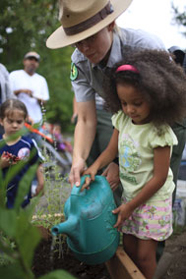
File:Yachats Community Park.jpgThese three codes of ethics are just a few examples of the many that fall under “Sustainable Parks, Recreation and Tourism”. What all three of them have in common are that they all stand for maintaining public facilities, land, and the environment, for current and future generations. I think that all in all, this code of ethics is respected and followed by those in parks and recreation careers.

People of all communities generally enjoy parks and public lands, and the opportunities they have to offer. It varies from community to community, but in regard to service like the National Parks, I would say that the people of the United States generally understand that these parks are here for the enjoyment of the citizens, and they trust those working in them to care for them properly. 

I would like to assist a community of some kind in enjoying and maintaining land that is there for the benefit and enjoyment of the citizens. Whether it be in a National Park, a State Park, or for a type of nonprofit, I would like for my job to be focused on giving the community an opportunity to be enjoy the outdoors. I have grown up going to local, state, and national parks, and I have had a positive experience with all three of them. I would like to contribute to the opportunities that these places can offer a community.

Images:
"Urban Park Rangers." : NYC Parks. N.p., n.d. Web. 21 Feb. 2016.
"Southern Miss Students, Faculty and Staff in Photos." Southern Miss Students, Faculty and Staff in Photos. N.p., n.d. Web. 21 Feb. 2016.
N.p., n.d. Web.
Sources:
"Parks & Recreation Planning | East Lansing, MI - Official Website." Parks & Recreation Planning | East Lansing, MI - Official Website. N.p., n.d. Web. 21 Feb. 2016.
"Wilderness.org." National Wilderness Preservation System. N.p., n.d. Web. 21 Feb. 2016.
United States. National Park Service. "National Park Service." National Parks Service. U.S. Department of the Interior, 20 Feb. 2016. Web. 21 Feb. 2016.

Wednesday, February 17, 2016

Agriculture and A Growing Population

By Micalah B

One of the biggest problems agriculture faces today is sustaining a rapidly growing population. Just how rapid? On our way to over 9 billion people, rapid.

Currently, the world has a population of about 7.4 billion people, a number we manage to, for the most part, provide enough food to support. However, scientists have predicted, by 2050, we will be facing a population of 9 billion people. How does this affect agriculture? Of course, these people must be fed. Current agriculture professionals are looking for more and more ways to feed more and more people.

Here are a few examples of how they're getting the job done:

No-till farming is a more recent method of farming where farmers grow their crops year to year without tilling, or disturbing, the soil. Farmers have instead taken to using a new device, often called a coulter, that allows seeds to be planted right through weeds and residues of previous plantings. Tilling the soil leaves a broken soil structure lying above a deeper, heavily compressed layer. This makes the soil very prone to being overly compacted by rainfall, and more difficult to farm. Untilled soil, however will start out less compacted, and stay that way. This saves farmers a whole lot of time, and gives seeds a much better environment to prosper in.

GMOs, or genetically modified organisms, is another modern method being used to feed more people. GMOs are genetically engineered into crops. They are responsible for things like pest resistant crops, that allow farmers to use less fertilizers, and crops with longer shelf life. GMOs have been shown to be a huge addition to the agriculture community when it comes to feeding more and more mouths each year.

Smartphones, believe it or not, have begun to play a big role on the most advanced farms out there. Irrigation systems can now be monitored and controlled by this sort of mobile technology, keeping farmers from having to drive out to each field and check the systems there. This new technology also allows farmers to more precisely control their flow of water, fertilizer, and other inputs for their plants.

These three advancements make up just a small portion of the many new technologies in today's modern agriculture. The modern technology we see is indeed different and untraditional, but it may be what ultimately saves this ever-growing population.


 "Improving Agriculture." <i>Growth of the World Population</i>. Monsanto Company, 2015. Web. 14 Feb. 2016. &lt;http://www.monsanto.com/improvingagriculture/pages/growing-populations-growing-challenges.aspx&gt;.

"No-Till Farming Pros and Cons." <i>Mother Earth News</i>. International Food Policy Research Instituion, 12 Feb. 2014. Web. 14 Feb. 2016. &lt;http://www.motherearthnews.com/homesteading-and-livestock/no-till-farming-zmaz84zloeck.aspx&gt;.

http://www.stylepinner.com/small-no-till-farming/c21hbGwtbm8tdGlsbC1mYXJtaW5n/

"International Programs." <i>- World Population: 1950-2050</i>. N.p., n.d. Web. 14 Feb. 2016. &lt;https://www.census.gov/population/international/data/idb/worldpopgraph.php&gt;.

Sunday, February 14, 2016

Global Climate Change- What is it, What Does it Cause, and What Can We Do?

By Emily T

Global Climate Change has been a subject discussed for decades. There has been debate and argument over what global climate change is, how it affects us, and what we should do about it. I do not have all the answers for these questions, but I believe that global climate change should be something that everyone is aware of, particularly in regard to global warming.
But, what really is climate change? What causes it? What are the consequences? And if we should be concerned, what can we do about it?

Here is Dictionary.com’s definition of climate change:
a long-term change in the earth's climate, especially a change due to an increase in the average atmospheric temperature

Here is the Environmental Protection Agency’s definition of Global Warming:
Global warming refers to the recent and ongoing rise in global average temperature near Earth's surface. It is caused mostly by increasing concentrations of greenhouse gases in the atmosphere. Global warming is causing climate patterns to change
This graph, based on the comparison of atmospheric samples contained in ice cores and more recent direct  measurements, provides evidence that atmospheric CO2 has increased  since the Industrial Revolution.  (Source: [[LINK||http://www.ncdc.noaa.gov/paleo/icecore/||NOAA]])
It is true that the climate of the earth has always been changing. Throughout history, there have been ice ages, the last one ending 7,000 years ago, which started the modern climate era. Climate change is not new, but many scientists are concerned with the recent changes of climate. Many scientists believe that the sudden increase in climate change is due to human activity. and they are concerned as to how it will affect us as humans. What scientists believe to me the main cause of the change of temperature is the “greenhouse effect”. The “greenhouse effect” is when the atmosphere warms due to the gases that are trapped in our atmosphere. Sunlight normally warms the atmosphere and then the heat is released back into space, but when this heat is trapped then it disperses in different directions, warming the surface of the earth. The cause of this is believed to be the excessive use of fossil fuels, particularly in the last 100 years. The burning of coal and oil increases the concentration of carbon dioxide, one of the main gases involved in the “greenhouse effect”.

This change of gases causes problems with every region of the world, including a change in temperature, sea levels, precipitation, and other natural disasters.
According to NASA, with the exception of 1998, the 10 warmest years have occurred since 2000 in the 134-year record.
This video by NASA displays the change in temperature from 1880 to 2010:

Due to the heat in the atmosphere, ice caps are beginning to melt. The melting of ice caps is causing the sea levels to increase drastically. It is believed that the sea level may increase 1-4 more feet before the end of the century, and it will continue to rise. This increase in sea level can also cause an increase in flooding around the world.
Global climate change also may cause an increase in precipitation and other natural disasters. Due to the increase in heat and gases in the atmosphere, the movement of water in the atmosphere also increases. This causes droughts and floods to be more frequent and severe. This will have effects on agriculture, human health, and the survival of different species. The change of climate may also increase the intensity of natural disasters, like hurricanes. The increasing temperature of oceans causes more hurricanes and tropical storms to become more severe, since their energy comes from warm water temperatures.
 
The consequences of global climate change are scary. However, there are things that we can do to make a difference. Small things like recycling can go a long way. Being efficient with water, such as cutting back on shower time, not leaving faucets running, and repairing leaks helps to conserve water which makes a difference as well. Cutting back on driving by walking, biking, or carpooling make difference as well because it reduces the release of fossil fuels.

Global climate change, including global warming, is a serious issue in our world, and it can seriously affect our future. However, if we all take steps to help the environment, there is hope that the consequences will not be so severe.


Sources:
"Climate Change Evidence: How Do We Know?" Climate Change: Vital Signs of the Planet. N.p., n.d. Web. 14 Feb. 2016.
"Drought, Fire, Floods | The Nature Conservancy." Drought, Fire, Floods | The Nature Conservancy. N.p., n.d. Web. 14 Feb. 2016.
"Global Climate Change: Effects." Climate Change: Vital Signs of the Planet. N.p., n.d. Web. 14 Feb. 2016.
"RCL Blog!" RCL Blog. N.p., n.d. Web. 14 Feb. 2016.
"What You Can Do." What You Can Do. N.p., n.d. Web. 14 Feb. 2016


How To Become An Active Listener

By:Janae S.

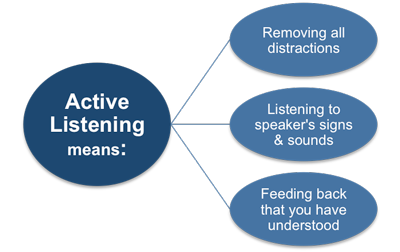
Active listening requires an active mind and increased energy. Listening is the most important factor in effective communication. Active listening intentional focuses on who you are listening to, whether its in a group or one-on-one to understand what the person is saying. As a listener you should be able to repeat back into your own words what that person has said to you. To improve your active listening skills consider these four tips:

  • 1.)Ask open-ended questions, because questions that come with yes, no, or one word answers will get responses that are less revealing to the listener. But if you ask questions like “What else might influence the way we handled this problem” or “What are your goals”. As a speaker you want to encourage the talker to give and force you to pick up the conversation where they left off.
  • 2.)Paraphrase, this will make sure you are listening and the other persons perspective is clear to you. When you are pushing yourself to paraphrase its pushing you to become more actively involved with the other person. This will usually happen when your having a conversation with a student, doctor, or anyone.
  • 3.)Listen first, advise second. When someone comes too you with a problem or an issue, our first impulse maybe to offer advice or a solution to that person. But sometimes the other person may just want someone to listen and understand them. By listening first, it will help you understand the problem better, but if they don't solve their own problem by talking about it then you should give them advice on what to do. 
  • 4.)Commit completely, the big key factor to becoming an active listener is don't let anything distract while listening to someone speak. For example if your in an office have a better, forward you phone to voicemail. Always make sure you show the other person eye contact as well because its a top priority to listening. 
By practicing these four tips it will help make yourself more aware of the way you communicate, and the bad habits you should avoid in the listening process.Listening is the most important part of communication, because if you don't understand the message being expressed to you, you will also fail in providing a good response back.

Sources:
http://www.skillsyouneed.com/ips/active-listening.html